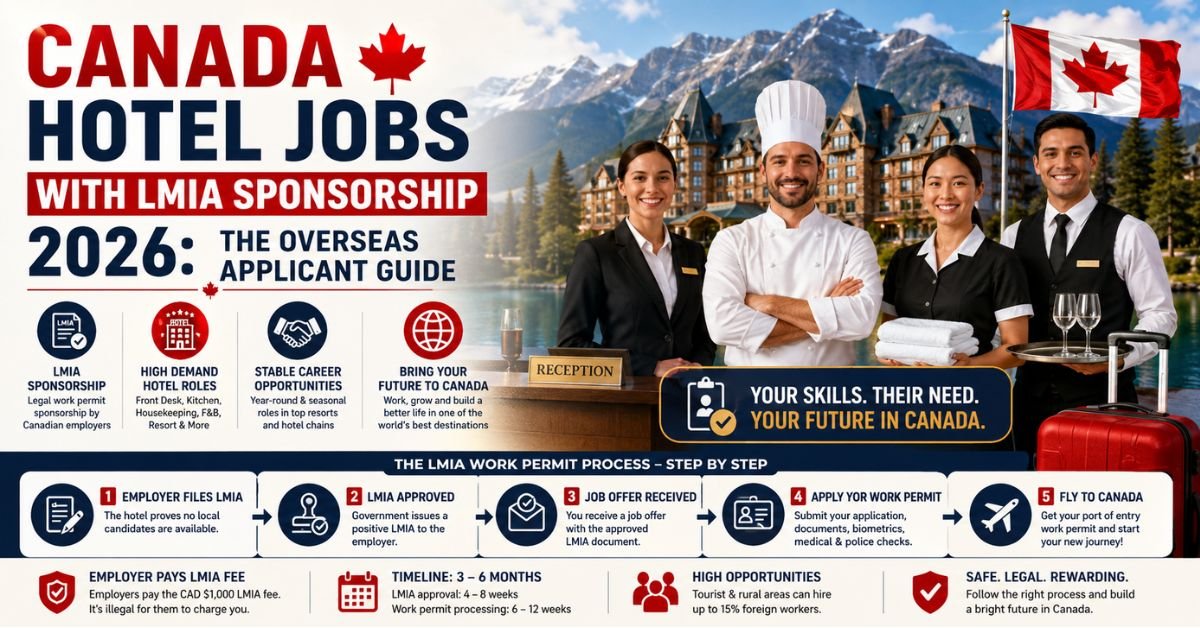
Canada Hotel Jobs With LMIA Sponsorship 2026: The Overseas Applicant Guide
Sending out resumes to Canadian hotels from another country usually feels like wasting your time. You keep getting those quick, automated rejection emails, which makes most people think that Canadian resorts only hire folks who are already there.
But the truth is that Canada’s hotel and food sectors are dealing with a massive worker crunch right now. Even though the government recently cut down the hiring caps for low wage foreign workers to 10% under the temporary worker program, it kept a big loophole open. Seasonal tourism spots and businesses in rural towns can still bring in up to 15% foreign staff because they just can’t find locals to do the work. If you know which jobs get quick LMIA approvals and look in the right provinces, you can actually land a sponsored job.
1. Where Are the Most Hotel Openings in Canada?
If you want a Canadian employer to sponsor your visa, you have to apply for specific roles where they are facing massive worker shortages. Don’t waste your energy on departments that already have enough local applicants. Target these areas instead:
Where the Sponsorship is Actually Happening
| What Department? | Exact Positions They Hire From Abroad | Why the Vacancy Exists |
| Front Counter Staff | Desk agents, night auditors, booking supervisors, lobby concierges | Constant flow of travelers moving through city hotels all year. |
| Restaurant & Bar Crew | Shift leaders, dining room supervisors, floor waiters, bartenders | Super high staff turnover; places need leaders to keep running. |
| The Kitchen Team | Head cooks, sous chefs, line cooks, kitchen helpers, pastry assistants | Huge shortage of certified kitchen professionals in every single province. |
| Cleaning & Repairs | Housekeeping supervisors, room maids, laundry staff, and property handyworkers | Crazy seasonal resort rushes and flexible visa rules for country hotels. |
| Resort Operations | Accommodation managers, spa schedulers, and guest experience leads | Big boom in luxury wellness travel setups around BC and Alberta. |
2. Finding Canadian Hotels That Actually Give LMIAs
Spamming your CV on massive job sites is a surefire way to get burnt out. If a small business doesn’t know how the government’s Labour Market Impact Assessment (LMIA) works, or can’t afford the fees, they will just delete your application.
Your best shot is targeting big resort networks, luxury hotel chains, and corporate groups in smaller towns. These places have proper HR teams that handle immigration paperwork every single month.
Smart Ways to Search:
- Look for Remote Destination Resorts: Mountain hotels in places like Banff or Jasper (Alberta) and coastal spots in British Columbia use seasonal hiring rules all the time when local staff pools run completely dry.
- Filter Wisely on Job Bank: When using the official Job Bank Canada site, check the box that says “open to international candidates” so you only see jobs with an active LMIA or relocation help.
- Check Old Government Lists: The Canadian government puts out public lists of companies that got positive LMIAs in the past. Look up those hotel names because you already know they can legally sponsor people.
3. How to Tweak Your Resume for Canadian Bosses
A resume that gets you jobs at home will probably fail in Canada if it has the wrong setup. You need to change the wording so a Canadian manager can understand your worth in five seconds.
- Fix the Format: Strip out your birth date, marital status, photo, or gender. Canadian laws don’t allow employers to look at that stuff to prevent bias. Just show your skills and work history.
- Change Local Job Titles: Swap out local software names or native certificates for global terms. Use basic words like POS systems, food safety standards, or handling inventory metrics.
- Put Real Numbers: Managers want to see the scale of your past work. Don’t just say cleaned rooms. Write something like: Cleaned and prepped 18 rooms per day under strict luxury resort guidelines.
- Put Your Moving Status Up Top: Right under your name, write exactly where you live and that you need an LMIA work permit. It helps international recruiters put you in the right pile immediately.
4. The Legal Visa Steps Explained Simply
When a Canadian hotel finally hands you a job offer, the visa paperwork follows a very strict routine. Knowing how this flow works ahead of time stops you from making silly mistakes that can trap your application in endless delays:
- Boss Files LMIA
Paper Gets Approved
You Get the Offer
File for Work Permit
Fly to Canada
Step 1: The Local Job Check (LMIA)
Before the hotel can even look at overseas talent, they have to prove to the government that it tried hiring inside Canada first. They do this by putting up local job ads for a month. If no local citizen or permanent resident applies or qualifies, the labor department gives the hotel an approval letter called a positive Labour Market Impact Assessment (LMIA).
Step 2: Getting Your Official Hiring Pack
Once that paper is cleared, the employer will officially send you the job contract. They don’t just send an email saying you are hired they have to give you a signed copy of that approved LMIA document along with a detailed breakdown of your pay, hours, and resort benefits.
Step 3: Filing the Digital Application
With the hotel’s paperwork in your hands, you log onto the official Immigration, Refugees and Citizenship Canada (IRCC) portal. Here, you file for a specific kind of work permit that binds you to that exact employer. You will have to upload your background history, passport copies, and the hotel’s LMIA number.
Step 4: Background Checks and Fingerprints
You can’t just skip to the flight; the government wants to make sure everything is safe. You will get a letter asking you to go to a local center to give your biometrics (fingerprints and photos). At the same time, you must upload a fresh police clearance certificate from your town and go to an approved clinic for a medical exam since you’ll be handling food or working face-to-face with hotel guests.
Step 5: Catching Your Flight and Landing
If the visa officers are happy with your documents, they won’t stick a work permit inside your passport yet. Instead, they mail you an official approval letter. You pack your bags, fly to Canada, and hand this letter to the border officer at the airport desk. They review it on their screen and print your physical, paper work permit right there so you can head straight to the resort.
5. Stuff Most Job Seekers Ask About (FAQs)
Can I just land in Canada as a tourist and switch over to a work visa?
You can absolutely network and hunt for a job while visiting on a visitor visa, and a hotel can process your LMIA paperwork. But do not make the mistake of working under the table; you cannot legally start doing any shifts at the resort until the immigration department completely clears your official closed work permit.
Is the employer supposed to charge me for the LMIA paper?
No, never. Canadian rules are very strict about this; the company has to pay that $1,000 CAD government fee out of its own pocket. It is illegal for them to deduct that money from your paychecks later on. The only costs you should be paying are your own personal visa application fees and whatever your local embassy charges to stamp your certificates.
How long do I have to wait before I can actually fly out?
The timeline moves in two parts. First, getting the actual LMIA approved takes the hotel roughly 4 to 8 weeks. After that, processing your personal work visa takes another 6 to 12 weeks, depending on where you are applying from. Realistically, you should expect the whole thing to take anywhere between 3 and 6 months from your first interview.
Action Plan: What to Do Next
Getting into Canada’s hospitality industry is all about being smart instead of just spamming your CV. First, take a day to clean up your resume and remove all your local jargon to fit the Canadian style.
After that, stop applying to small local cafes and focus entirely on massive resort systems or corporate hotels in Alberta and British Columbia. These rural and tourist areas have the legal space to sponsor you. Get your police clearance and school transcripts ready now so you don’t waste time later.
Disclaimer :
This guide is just to help you understand how the Canadian hotel hiring process works for outsiders. Visa rules and provincial caps change fast, so always check the official IRCC portal before booking flights or spending money. We don’t handle recruitment, sell visas, or offer legal services, so all employment deals must be done directly with your hiring hotel.