
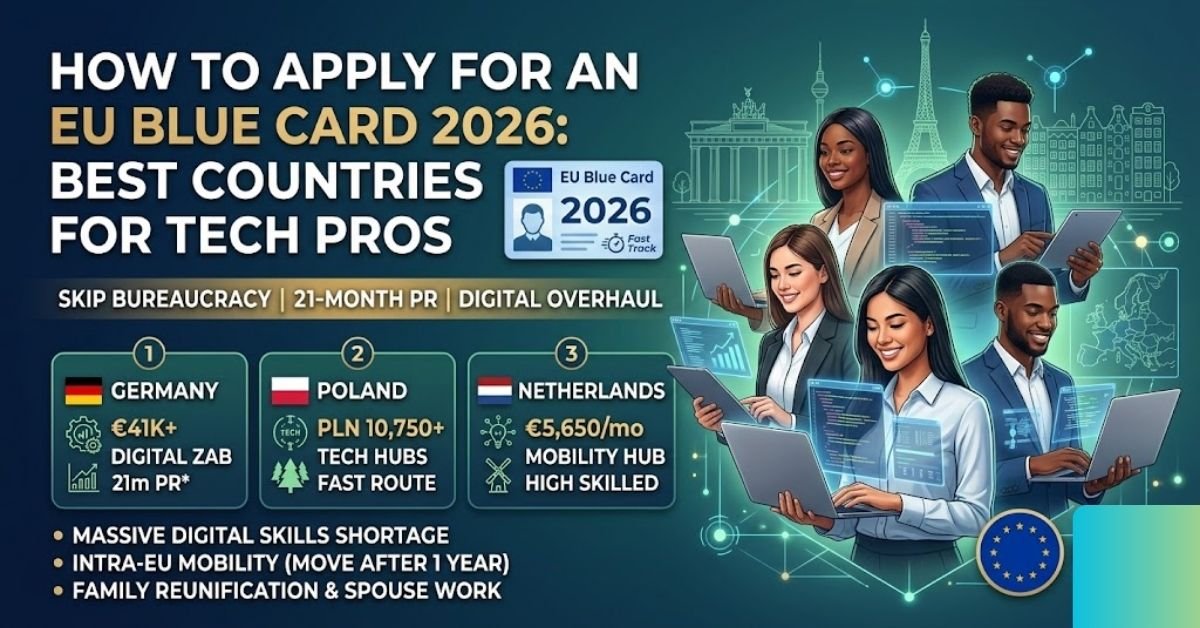
How to Apply for an EU Blue Card 2026: Best Countries for Tech Pros
Forget the old days when landing a high tier role in Berlin or Amsterdam meant drowning in paperwork. For 2026, the EU Blue Card has undergone a massive digital overhaul, effectively eliminating the long wait times for developers and AI architects. If you’re donewith the standard visa grind, this new directive is your fast track ticket to a four year residency without the usual soul crushing red tape.
The real strategy this year is simple: exploit the massive Digital Skills Shortage across the Schengen Area to skip the usual labor market hurdles. Major players like Germany and Poland have already slashed their salary bars and put the Permanent Residency track on steroids, now as short as 21 months for the right pros. Plus, with Intra EU Mobility rules, you can move between member states after just one year, making your career growth across Europe pretty much limitless.
1. 2026 EU Blue Card: What’s Different This Year?
Let’s be honest: Europe’s old bureaucracy was a nightmare. But for 2026, the EU has finally started tightening the screws on redundant paperwork while actually opening the doors for tech pros. The old school obsession with having a decade of experience is fading; right now, it’s all about proving your Certified Professional Qualifications and hitting the new, more realistic salary benchmarks.
The Major 2026 Shifts You Need to Track:
- Lower Salary Entry Points: To stop the brain drain and attract younger talent, several EU nations have officially slashed their Annual Gross Salary Benchmarks. You no longer need to be a corporate veteran to afford the dream entry level and mid level techies now have a real shot.
- PR on Fast-Forward: The long, painful wait for Permanent Residency has been gutted. In some of the best tech hubs, you can now ditch the temporary status and apply for PR in just 21 to 27 months. It’s a massive shortcut compared to the traditional 5 year slog.
- The Intra EU Mobility Hack: This is the ultimate game changer for 2026. Once you’ve spent just 12 months in your first EU country, you can move to a new job in a different member state without the headache of starting a fresh visa application from scratch.
2. Best EU Hubs for Tech Pros: Where to Apply in 2026?
Not all EU countries are built the same. Depending on your tech stack and how much you want to save, these three nations are currently leading the EU Blue Card 2026 race.
Germany (The Industrial Titan): The German Blue Card is still the gold standard. The best part? The ZAB (Degree Evaluation) is now 100% digital, so getting your papers recognized takes weeks, not months. Germany is also aggressively hunting for ICT Specialists, even if you don’t have a degree, 3+ years of high-level experience can get you in.
Poland (The Silicon Forest): If you’re a mid-level dev, Poland is arguably the most flexible choice right now. They have massive Hiring Quotas for Java, Python, and Cybersecurity experts. It’s the fastest route into Eastern Europe’s booming tech scene.
Netherlands (The Innovation Hub): Most people look at their local Highly Skilled Migrant scheme, but the Blue Card is the real winner if you’re planning to move around Europe later. It’s the ultimate play for long term Intra EU Mobility.
2026 Snapshot: Salary & Wait Times
| Country | Min. Salary (Tech 2026) | Visa Processing | PR Fast-Track |
| Germany | €41,030 – €45,600 | 4-8 Weeks | 21-33 Months* |
| Poland | PLN 10,750+ (Gross) | 3-5 Months | 24 Months |
| Netherlands | €5,650 (Monthly) | 3-6 Weeks | 5 Years |
| Belgium | €46,500 (Annual) | 7-10 Weeks | 5 Years |
Note: Germany offers PR in 21 months with B1 German; otherwise, it’s 33 months.
3. The No Fail Roadmap: How to Apply in 2026
If you want your Work Permit for Software Engineers to slide through without a single rejection, you need a surgical approach. Don’t overlook the small stuff that’s usually exactly where the embassy catches you out.
Step 1: The Contract Audit (Your Foundation)
Your job offer is only as solid as the fine print. For 2026 compliance, your contract must hit these non negotiable marks:
- The Timeline: It has to be for at least 6 months, though 12+ is the sweet spot for easier approval.
- The Paycheck: You must hit the exact EU Blue Card Salary Threshold 2026 for your specific country no exceptions.
- The Role: Your job title needs to align with Highly Qualified categories (check those ISCO-08 groups 1 and 2).
Step 2: Credential Verification (The ZAB Filter)
For Germany especially, the Academic Degree Evaluation (ZAB) is the ultimate gatekeeper. Never just assume your degree is recognized. Hit the Anabin database and look for that H+ rating immediately. If your uni isn’t there, trigger a “Statement of Comparability” before you even think about booking an appointment.
Step 3: Digital Submission & Red Flag Traps
Almost every EU hub has shifted to a centralized e-portal for 2026. This is where you’ll upload your notarized contract, biometrics, and health insurance. Watch out: Your job title needs to make sense with your degree. If you have a Civil Engineering degree but are applying for a Software Dev role, you’ll need a rock-solid explanation or extra certifications to avoid an instant Red Flag.
Step 4: The VFS Global / Consulate Appointment
Once your digital file gets the green light, it’s time for the physical biometric check. Pro tip for 2026: Most tech hubs now offer Priority Slots exclusively for Blue Card applicants. Use these to bypass the soul-crushing 3 month wait times that regular work permit seekers are currently facing.
4. The Secret Weapon: Intra EU Mobility
One of the most overlooked benefits is the Intra EU Mobility Rules. If you land a job in Poland but a year later get a better offer in Munich, you don’t have to go back to your home country. You can apply for a new Blue Card directly from within Germany. This is the ultimate Career Shortcut in the European tech landscape.
5. Family First: EU Blue Card Family Reunification
Unlike standard permits, the Blue Card is built for families. Your spouse gets an automatic right to work in any sector (no labor market test for them).
- No Language Requirement: In most cases, spouses don’t need to prove A1 German/French to join you.
- Simultaneous Filing: You can file for your family at the same time as your own application.
EU Blue Card 2026: Real World FAQs
Q: What actually happens if I lose my job?
A: First off, don’t panic. You aren’t kicked out the next day. Under the 2026 rules, you get a solid 3 to 6 month grace period to hunt for a new Highly Qualified role. As long as your next contract hits the Blue Card salary and skill benchmarks, your residency status stays perfectly intact.
Q: Can I really apply without a formal University degree?
A: Believe it or not, yes but it depends on where you’re headed. Countries like Germany and Belgium have opened doors for ICT Professionals who might not have a degree but can prove 3 to 5 years of high level experience in the tech sector. If your portfolio is solid and your salary hits the mark, you’re definitely in the running.
Q: Is there a Fast Track for AI and Machine Learning roles?
A: Absolutely. AI and Data Science are on the 2026 Shortage Lists, letting you skip the grueling labor market tests and get a visa green light much faster than regular dev roles.
7. Final Verdict: Is it Worth it?
The EU Blue Card 2026 is the most powerful tool for any tech professional looking to exit the visa lottery systems of the US or the high competition markets of the UK. With Employment Contract Compliance and a solid stack, you are less than 60 days away from a life in the heart of Europe.
Disclaimer:
We’ve built this 2026 roadmap to help you navigate the system like a pro, but don’t treat it as official legal advice. Visa rules and salary bars in Europe can literally flip overnight. Always double check the latest fine print on official EU portals before you spend a penny on translations or applications. We aren’t a government branch, and we don’t have inside tracks to fast track your visa; at the end of the day, the final decision is 100% in the hands of the embassy.