
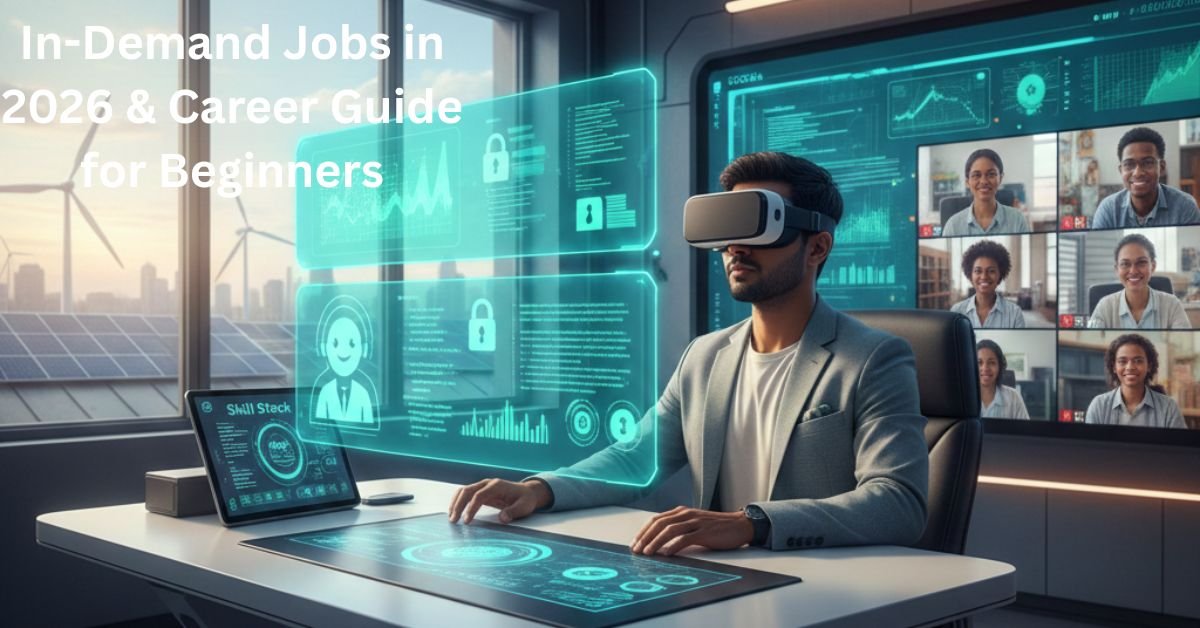
Let’s be real for a second—the old formula of ‘just get a degree, and your job is set’ has completely failed us in 2026. Today’s workplace is vastly different from what it was even two or three years ago. AI isn’t just something people talk about anymore; it’s literally become your new ‘office colleague.’
If you’re just starting your career and feeling a bit freaked out, don’t sweat it. Whether you’re hunting for high-paying remote jobs in 2026 or trying to figure out which online certifications actually have the best ROI, this guide is built for you. We aren’t going to bore you with corporate jargon here. Instead, I’m giving you a real, data-backed roadmap so you can pick a career that actually has a future.
1. What Are the “Big” Jobs in 2026?
The job market trends of 2026 show a massive shift toward specialized tech and human-centric roles. Here is where the money and stability are right now:
AI-Augmented Roles & Ethics
You don’t need to be a coder to work in AI anymore. Companies are now hiring for Ethics and Compliance in AI to make sure their bots aren’t biased. These are automation-resistant jobs because they require human judgment and empathy.
Cybersecurity for Beginners
With everything moving to the cloud, hackers are getting busier. Cybersecurity for beginners is a massive entry point. If you can protect data, you’ll never be out of a job. Most people start with industry-specific certifications like CompTIA Security+ and land a job within months.
Sustainability & Green Energy Careers
The world is going green, and so is the money. From solar technicians to sustainability consultants, sustainability and green energy careers are booming. These are perfect for those who want a “meaningful” career with high growth.
2. Getting Your Start (The Stress-Free Way)
Starting a career is messy. You look at thousands of job posts and start thinking that if you don’t nail the “perfect” choice immediately, you’ve failed. But here’s the reality: by 2026, those specific job titles don’t carry much weight anymore. What actually matters is your “skill stack”—that unique mix of things you can actually deliver.
Here’s how to get your head straight and start moving:
- Ditch the Job Boards for a Minute: Forget about scrolling for a second and look at what you’re actually good at. Categorize everything into Soft Skills vs. Hard Skills. You might be a natural at chatting with people (Soft), but haven’t learned a technical data tool (Hard) yet. The best-paid roles in 2026 are for people who can do both—like taking a messy data sheet and explaining it to a room full of humans.
- Your Old Jobs Still Count: Switching fields? Don’t think for a second that you’re starting from zero. That retail shift where you handled twenty angry customers? That’s top-tier crisis management. That group project you ran in school? That’s leadership. These transferable skills are exactly what tech companies are hunting for right now.
- A Better Way to Network: Honestly, stop wasting time on those generic cold emails that just end up in the trash. Networking in 2026 is about showing people you’re actually useful. Go on LinkedIn, find some mentorship programs, and just talk to people like a human being. Don’t worry so much about who you know—focus on making sure the people you do talk to understand exactly what you can bring to the table.
3. How to Choose a Major (or a Bootcamp) in 2026
Choosing a path is scary. If you’re wondering how to choose a major in 2026, look for “Hybrid” fields.
- Example: Instead of just “Marketing,” go for “AI-Driven Digital Marketing.”
- Alternative: Skip the 4-year degree and look for vocational training for beginners or intensive bootcamps that offer professional development and job placement.
4. Work-Life Balance and the Hybrid Model
That whole sitting in an office from 9 to 5 thing? It’s basically a ghost of the past now. In 2026, if a company isn’t offering a hybrid work model, they’re struggling to find anyone to hire. When you’re hunting for a role, don’t just look at the salary—look for places that actually respect your work-life balance (and don’t just put it in the brochure). It’s getting pretty crazy, too; some teams are even using virtual reality (VR) workspace management to hang out digitally. It’s a bit out there, but hey, it beats wasting half your life stuck in a car commuting to a desk.
Step-by-Step Roadmap for 2026 Career Success
| Step | Action Item | Target Goal |
| 1 | Identify a Niche | AI, Cyber, or Green Energy |
| 2 | Get Certified | Look for high ROI online certificates |
| 3 | Build a Portfolio | Show, don’t just tell |
| 4 | Start Networking | Find a mentor via LinkedIn |
Final Advice
Let’s be real—most career books are full of it. You don’t need some master plan for your entire life the second you turn 22. Honestly, the people winning in 2026 aren’t the ones with the fancy degrees; they’re the ones who can dump what they know and learn something fresh overnight. Just focus on grabbing some useful digital skills, keep asking questions, and look—if that first job you pick ends up being a nightmare? Just quit and try something else. It’s totally okay to mess up a few times before you find what actually works for you.
Anyway, what are you thinking? Any of these career paths actually catching your eye? Write it down below—I’d love to hear your take. Also, if you’ve got a friend who’s just lost right now, pass this along to them. Let’s just try to figure this stuff out together, yeah?
Disclaimer: I’m just sharing what I’ve seen happening in the market to help you out. But don’t treat this like some official rulebook or legal talk. Things change fast, and what works for me or someone else might not be your thing. So, before you go and spend your hard-earned cash on a boot camp or do something big like quitting your job, please do your own checking first. Maybe talk to a real pro if you’re unsure. I’m just pointing at the door, but you’re the one who has to walk through it!