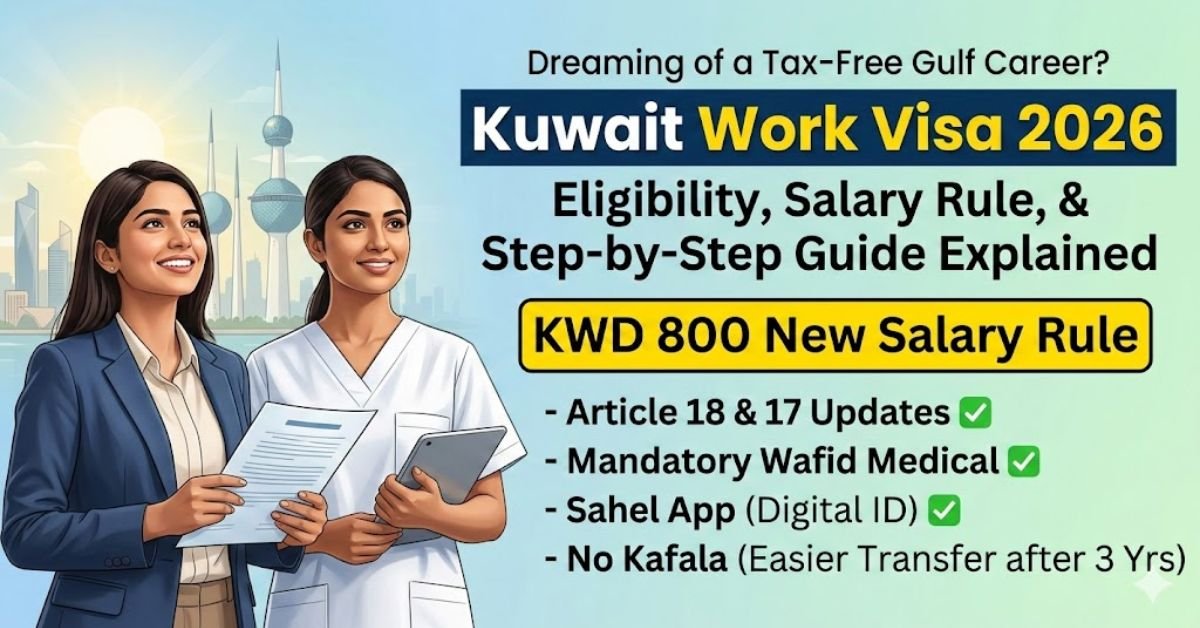
Kuwait Work Visa 2026: New KWD 800 Salary Rule & Step-by-Step Guide
Dreaming of a high paying career in the Gulf? You aren’t alone, but you should know that 2026 has completely changed the game for the Kuwait Work Visa. The days of easy, walk in permits are long gone. Today, Kuwait is shifting toward a much stricter, merit-based strategy that focuses on economic quality rather than just quantity. While that financial wall of new regulations might feel a bit intimidating, it’s actually great news if you’re a high skilled professional. Whether you’re in healthcare, engineering, or a specialized technical trade, the new system is designed to fast-track people who actually bring value to the table.
But look, before you even think about packing your bags, you’ve got to get your head around the Kuwait Residency Law Updates 2026. It’s no longer just about filling out a few forms; it’s about navigating the new KWD 800 salary floor for family visas and mastering the Sahel App for your digital ID. If you ignore these details, you’re looking at a massive legal headache later. To make things easy, I’ve broken down the exact eligibility steps and the roadmap you’ll need to follow to make your move to Kuwait as smooth as possible.
At a Glance: Kuwait Work Visa Snapshot 2026
| Feature | The 2026 Reality |
| Common Visas | Article 18 (Private) & Article 17 (Public) |
| Family Sponsorship | KWD 800/month (Hard floor) |
| Basic Wage | KWD 75 – KWD 100 (Unskilled baseline) |
| Passport Rule | 2-Year validity is a must |
| Medical | Full GAMCA / Wafid report |
| Digital ID | Sahel App (No physical ID at first) |
| Annual Fees | KWD 20 (Iqama) + KWD 100 (Health Cover) |
1. Which Visa Category Fits You?
The Public Authority for Manpower (PAM) has streamlined things. Most expats will fall into one of these two buckets:
Article 18 (The Private Sector Route): This covers everyone from petroleum engineers in the oil fields to software devs in the city. If a private company is hiring you, this is your visa.
Article 17 (The Government Route): Reserved for those joining ministries, public schools, or state hospitals.
2. Let’s Talk Cash: The 2026 Salary Reality
Let’s be real the main reason you’re even looking at Kuwait is that fat, tax free paycheck. But here’s the deal for 2026: Kuwait isn’t just handing out permits to everyone anymore. They want people who can actually carry their own weight financially. This shift has created what expats are calling the Salary Wall. You’ve got to know your worth before you sign on that dotted line.
The Family Visa Wall (The KWD 800 Rule) Planning to bring the family along? Listen up, because this is where most people get stuck. If you want your spouse or kids on an Article 22 (Family Visa), the rules are now rock-solid. You must hit a monthly salary of at least KWD 800. Now, if you’re a high-flying surgeon or a top-tier engineer, you might find some wiggle room. But for everyone else? KWD 800 is the new floor. No debates, no exceptions.
What’s the actual money like?
The Skilled Sweet Spot: Don’t look at the basic labor legal floor it’s too low. In 2026, most skilled expats are landing offers between KWD 450 and KWD 1,200. Anything less for a skilled role? You might want to think twice.
The Zero Tax Kicker: Here’s the best part Kuwait still doesn’t touch your income. That annoying Gross vs. Net gap that eats your salary in the UK or Canada? Gone. Whatever is written on your contract is exactly what lands in your pocket every single month.
3. The Must-Have Eligibility Checklist
Before you even think about packing your bags, you’ve got to get your paperwork in order. Kuwait’s authorities are not playing around in 2026 if one document is off, your application is going straight to the bin. Here are the four “make-or-break” things you need:
The Passport Rule: Your passport needs at least 24 months of life left in it. Don’t try to push it with 6 or 12 months; you’ll just hit a brick wall at the embassy and face massive delays.
The Age Bracket: The sweet spot for most work permits is 21 to 50 years old. Now, if you’re a seasoned expert in a high demand niche (like specialized surgery or oil tech), you might still snag a waiver over 50. But for everyone else, this range is the standard.
A Clean Slate (PCC): You’ll need a fresh Police Clearance Certificate (PCC) from your home country. And it’s not enough just to have it it must be attested by the Ministry of Foreign Affairs (MOFA). No certificate, no visa. Simple as that.
The Degree Verification: Kuwait is cracking down hard on credential fraud in 2026. Your degrees and certificates must be officially authenticated. If there’s even a tiny doubt about your papers, they won’t hesitate to reject you.
4. Your Step-by-Step Roadmap
You can’t just click a button and get a visa. It’s a process that looks like this:
Step 1: The PAM Permit: Your employer does the heavy lifting here, applying to the Public Authority for Manpower for your work permit.
Step 2: Medical Testing: You’ll visit a GAMCA / Wafid center for blood tests and X rays.
Step 3: The Stamping: Once the entry permit is out, you get it stamped at the Kuwaiti embassy in your country.
Step 4: Going Digital: After landing, you’ll give your biometrics. In 2026, you won’t get a physical Civil ID card right away. Instead, you’ll use the Sahel App for your Digital Iqama.
5. Who’s Getting Hired? The 2026 Fast Track Jobs
Look, Kuwait isn’t just handing out visas to everyone anymore. But if your skills fit into these Hot Zones, your approval is usually much faster because the country is literally begging for talent in these sectors:
The Healthcare Hero: This is the biggest gap right now. Nurses, lab techs, and specialized surgeons are in massive demand. If you’ve got the certifications, the red tape usually melts away.
The Energy Backbone: Oil is still king here. But in 2026, the focus has shifted toward Safety Auditors and Petroleum Engineers who know how to handle modern, green-energy transitions within the oil sector.
The Tech Frontier: Since everything is moving to the Sahel app and cloud systems, Cybersecurity Experts and Cloud Architects are the new gold. If you can protect data, Kuwait wants you.
The Skilled Trades (Blue-Collar Gold): Don’t sleep on this! Specialized roles like Industrial HVAC Techs and High Pressure Welders are earning executive-level salaries because there just aren’t enough people to do the heavy lifting.
6. The 2026 Game Changer: Long-Term Residency
Kuwait is finally playing the long game, and this is huge news for anyone tired of the yearly residency headache. For the first time, they are moving away from short-term permits and offering something much more stable. If you’ve got the capital or the expertise, here is how you can stay for a decade (or more):
The 10-15 Year Golden Visas: This isn’t for everyone, but if you’re a major investor or you’re looking to buy property in specific zones, these long-term slots are finally open. It’s a massive shift designed to keep big money and talent inside Kuwait for the long haul.
Article 24 (The Be Your Own Boss Route): This is the one everyone is talking about. It’s a self-sponsorship option for high-end consultants and retirees. Basically, you pay an annual fee of around KWD 500, and you don’t need a traditional “Kafil” or boss to breathe down your neck. It’s total freedom for the right kind of professional.
7. Real Talk: Your Top Questions Answered
Q: Can I just fly in on a Visit Visa and swap it for a Work Permit later?
The Reality: Honestly? Rarely. Gone are the days of easy conversions. In 2026, Kuwait clamped down on this big time. Unless you’re on a high-level government contract or you’re a specialized expert that the country is desperate for, don’t count on it. Always get your work entry permit sorted before you land to avoid a wasted trip.
Q: Is the Kafala system still around?
The Truth: Technically, yes, but it’s not as rigid as it used to be. The 2026 reforms have made things a lot more flexible for expats. You aren’t stuck with one boss forever anymore. Now, you can legally jump ship to a new employer much more easily once you’ve put in 3 years or finished the specific project you were hired for. It’s a huge win for worker rights in the Gulf.
Final Verdict: Is it worth it?
The Kuwait Work Visa 2026 is definitely more selective, and the salary floor is higher. But for those who make the cut, the infrastructure and tax free perks make it one of the best career moves in the Middle East. Just remember: always verify your status through the official MOI portal and stay far away from “visa agents” making too-good to be true promises.
Disclaimer :
Look, this guide is just for your information and isn’t formal legal or visa advice. We try our level best to keep these 2026 updates as sharp as possible, but Kuwait’s rules can flip on a dime—so always verify things on the official Ministry of Interior (MOI) site before moving. We aren’t part of the government, and we strongly suggest chatting with a legit immigration expert before you drop any cash or finalize your travel plans.