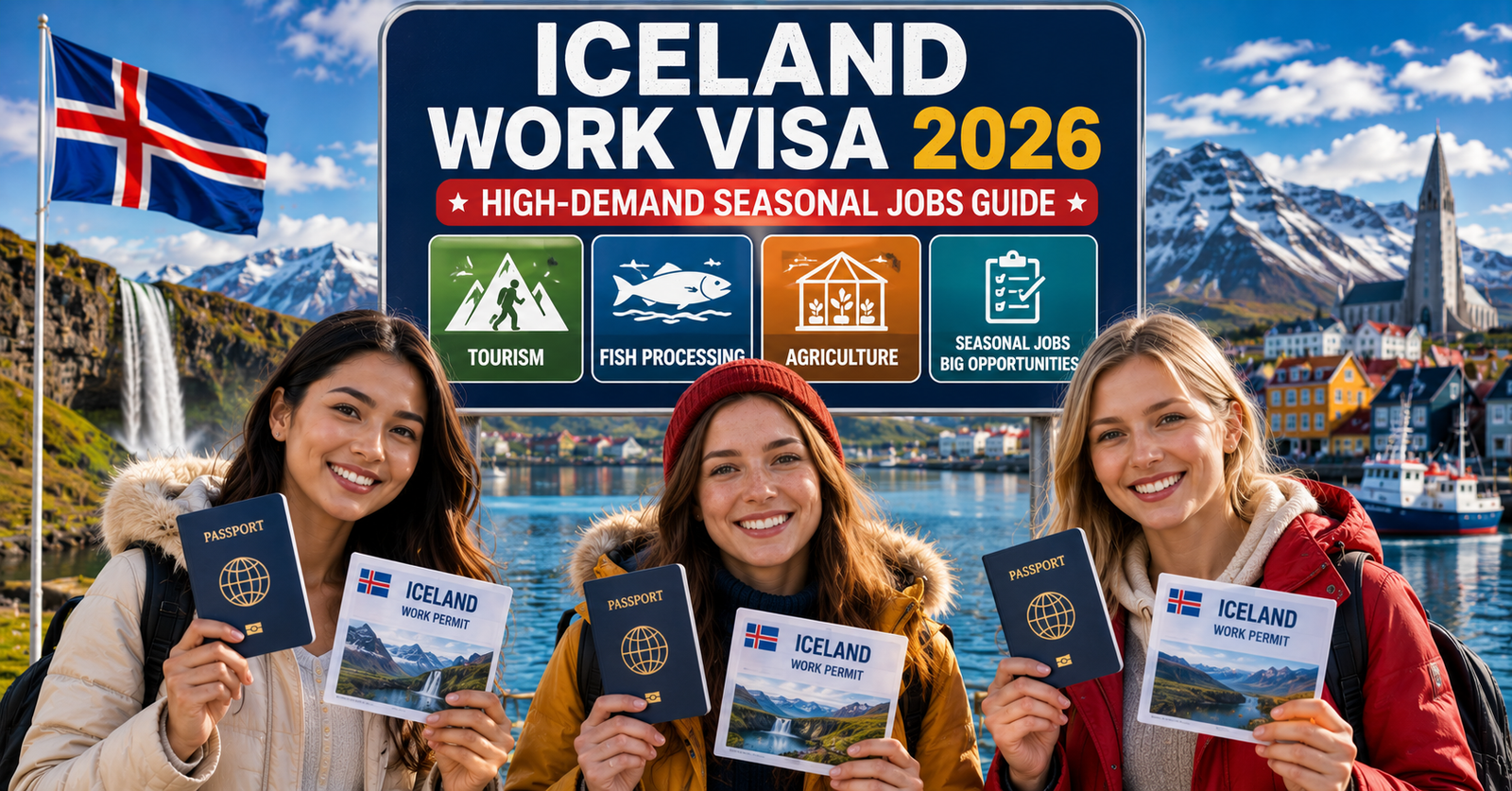
Iceland Work Visa 2026: High-Demand Seasonal Jobs Guide
If you want to grab a short-term job in Iceland today, you cannot just stick to old ways of looking for work. Dropping a basic resume into every online application you see is just a waste of hours since local bosses are totally tired of mass emails. It does not matter if you want a spot inside a greenhouse, a fish processing plant, or a tour company, you have to connect with people directly. To get a real response, make sure your first message shows you actually care about their business.
Also, the visa office is looking very closely at every single file to spot and reject automated paperwork. You really cannot afford any sloppy mistakes if you want to avoid long delays or getting a quick no. Your whole work contract and all your personal ID details have to look exactly right and follow the local rules for this year. Cutting corners or guessing on these forms will definitely cause you a lot of trouble.
1. Local Union Scales and Financial Thresholds
Unlike many European economies, Iceland operates without a singular, legislated national minimum wage. Instead, the baseline pay structure is strictly governed by collective wage agreements brokered between regional trade unions and employer federations. Under the active oversight of the Directorate of Labour, any temporary or short-term work contract must mirror or exceed these verified union minimums. If an employment agreement falls short by even a minor margin, the application file is dismissed automatically during the initial scanning phase.
The following data reflects the verified baseline gross compensation brackets across key sectors for the current hiring cycle:
| Targeted Sector | Primary Operational Window | Minimum Monthly Base (Gross ISK) | Required Contract Alignment |
| Tourism Sector | Summer Season (June–August) | ISK 410,000 (~$2,950 USD) | Standard Full-Time Structure |
| Hospitality Sector | Winter Peaks / Year-Round | ISK 415,000 (~$2,990 USD) | Shift-Based with Night Premiums |
| Fish Processing | Heavy Catch Autumn/Winter | ISK 430,000 (~$3,100 USD) | Production Scale / Shift Minimum |
| Agriculture Sector | Spring Cultivation Cycles | ISK 395,000 (~$2,850 USD) | Temporary Short-Term Bounds |
Critical Notice: Total gross pay parameters vary significantly when integrating statutory overtime tiers and mandatory holiday pay rates defined by local labor law. Working in Iceland via a legally registered work permit guarantees that foreign nationals receive the exact same labor rights, healthcare access, and compensation floors as native workforce members.
2. What Non EU Folks Need to Know First
Look, Iceland’s immigration department doesn’t play around. It’s a completely zero-compromise setup. Miss one tiny piece of paperwork, and boom they dump your file straight into the trash. No follow-up emails, no “hey, you forgot this.” Nothing.
EU vs. Non-EU: The Massive Divide. Having an EU or EEA passport is basically a golden ticket here. You just pack your bags, land in Reykjavik, grab a seasonal gig, and register your address whenever you get around to it. Zero sponsorship needed. But if you’re holding a non-EU passport? Total nightmare. You can’t legally work, help out on a farm, or even earn a single Krone until an actual, registered Icelandic business convinces the Directorate of Labour to grant you an official permit first.
No, You Can’t Move for a Side Hustle. Don’t even bother applying if you’re planning to do freelance gigs, Uber style side hustles, or zero-hour casual contracts. Iceland doesn’t hand out temporary work visas for part-time setups. Your sponsor has to tie you down with a legit, rock-solid contract from a company that’s actively registered in the national database. They want you working full-time. The only rare exception is if your specific industry has a standard 80% work-week model, which immigration sometimes overlooks.
The Tourist Visa Trap (Don’t Do It) This is where so many people mess up: landing on a standard Schengen tourist visa, thinking they’ll just stroll into a hotel or farm, get a job, and switch their visa right there. That option literally does not exist. If the system catches you trying to file a work application while sitting inside Iceland on a tourist stamp, it’s an instant automated red flag. They will reject it immediately and give you an order to pack up and leave. You have to sit tight in your home country while the employer does all the heavy lifting and onshore filing.
3. Gigs Where You Actually Have a Shot as a Foreigner
Let’s be real here. If you are trying to apply from thousands of miles away, you are honestly just wasting your time unless your skills hit the exact gaps Iceland is desperate to fill right now. Forget generic job hunting. It doesn’t work. If you want a fast-track visa sponsorship, you have to aim directly for the spots where the government dumps its biggest chunk of short-term foreign worker quotas. When you look at the actual data, it pretty much boils down to three specific industries.
Tourism & Hospitality Jobs in Iceland. The travel industry here is absolutely exploding. Local businesses are constantly screaming for extra bodies to keep up, and they are willing to sponsor. It doesn’t matter if it’s a tiny wilderness lodge hidden away in the Westfjords, a rugged outdoor adventure company, or some chaotic hotel right in downtown Reykjavík, they need people, and they need them immediately. Mostly, they’re looking to grab outdoor safety pros and certified glacier guides who know how to survive the terrain, alongside night-shift clerks, front-desk staff, line cooks, bartenders, and English-speaking kitchen helpers. And honestly, here is the absolute best part: since these places deal almost entirely with international travelers, everything runs in English. You can easily sail through your interviews and get locked in for a job without knowing a single random word of Icelandic (Íslenska).
Fish Processing Jobs in Iceland The seafood export scene is pretty much the backbone of this whole economy. Massive industrial processing plants up in Akureyri and scattered all over the Reykjanes peninsula have to constantly onboard waves of international seasonal workers. Why? Because when those massive catch spikes hit, they just don’t have enough locals to handle the sheer volume. These are heavy manual labor jobs where nobody gives a damn about a fancy university degree, but you absolutely must have the physical stamina to stand on your feet for hours and stick to strict plant safety rules. It’s tough work, but they hire.
Greenhouse Farming & Technical Agriculture. Because Iceland sits right on top of massive geothermal energy grids, they can run advanced commercial greenhouses all year round even when it’s freezing and pitch black outside. But keeping those vegetables growing means they rely heavily on foreign farm hands. Sponsoring farms don’t want absolute rookies. They usually look for people who have actual, hands-on experience handling automated irrigation setups, high-density crops, and modern harvesting equipment.
4. How the Whole Process Flows (Step by Step)
The exact moment you land a job and your employer hands over a verified contract, you are officially on the clock. You have to follow a very specific legal timeline here. Do not try to skip ahead or mix up these steps, because the immigration department runs on a completely automated system that rejects anything out of order.
First: You need to Lock Down the job. You cannot just apply for an Icelandic short-term visa out of nowhere; you absolutely must have a binding job offer in your hand first. Start hunting on local recruitment platforms like Alfred.is, use the EURES portal, or check the careers pages of big Icelandic companies directly. Make sure your resume clearly highlights any certified machinery skills or solid seasonal experience you have.
Second: The Local Market Check. Once you and your boss sign the contract, the company has to take your case straight to the Directorate of Labour. By law, they have to prove to the government that they couldn’t find a single qualified Icelandic citizen or EU national to do the job before they are allowed to give that slot to an overseas applicant.
Third: Sorting Your Paperwork and Biometrics. As soon as the labor board gives the green light, it’s your turn to file the official residence application. You’ll need to head over to the designated Icelandic embassy or the closest VFS Global center in your home country. They are going to demand your physical passport, certified translations of your documents, a clean police record, and that signed job contract.
Fourth: Getting and Activating Your Kennitala Iceland. Once that visa stamp hits your passport, you are legally free to catch your flight. But the paperwork doesn’t stop when you land. Within your first few days in the country, you have to run over to Registers Iceland (Þjóðskrá) to activate your Kennitala Iceland which is their national ID number. Honestly, without this number, you are stuck; you won’t be able to open a local bank account, get your monthly salary, or even get your tax forms sorted.
5. Quick Answers to Common Questions
Can you turn a seasonal permit into a permanent long-term visa?
Honestly, no. The government is super strict about this. Temporary seasonal visas are strictly short term and you cannot renew them. They lock you into a fixed window that tops out at a maximum of six months, period. Once your contract runs out, the law says you have to pack your bags and leave the country. These specific permits don’t count at all toward permanent residency or citizenship time.
Are Icelandic employers legally forced to give you a place to live?
It depends on where you end up. If you are working in rural fish factories, farming setups, or remote hotels way outside the capital city, employers usually throw in subsidized staff housing to make it work. But don’t take it for granted it’s not actually a legal requirement by the government. It all comes down to what you negotiate in your private contract, so make sure you get those housing details locked down in writing before you buy your plane ticket.
What happens if your seasonal employer goes out of business early?
This is a tricky situation because your legal right to stay and work is tied 100% to that one specific business. If the company shuts its doors early, you have to contact the labor board right away to let them know. You can’t just walk across the street and start working for a different boss. A new employer would have to file a fast-track contract amendment immediately to re-validate your legal visa status before you can touch a single piece of equipment.
The Final Verdict Are You Actually Ready?
Look, before you even bother booking a flight or squeezing everything into your suitcases, you have to be completely real with yourself about this. You need to verify three massive things right now, or the whole plan collapses. First off, you must have an actual, signed employment contract waiting for you from a company that genuinely exists in the official Icelandic corporate registry. Next, you have to double-check that your gross monthly pay matches the exact union brackets mandated for your specific job and area—no under-the-table cuts. And finally, make absolutely sure you have already locked in your physical document authentication appointments before you go wasting cash on plane tickets. If you can honestly check all three boxes, your paperwork is up to the current legal standard and you are cleared for takeoff. Just do yourself a huge favor: stay miles away from those sketchy third-party agencies promising shortcuts. Stick entirely to official state channels, follow the rules to the letter, and the immigration framework will do exactly what it is designed to do.
Disclaimer :
This informational overview compiles public data regarding temporary immigration rules and does not represent official legal counsel, recruitment services, or binding visa approvals. We maintain no affiliation with the Directorate of Labour Iceland (Vinnumálastofnun). Applicants must directly verify structural policy shifts on official government portals before initiating employment fees or travel bookings.