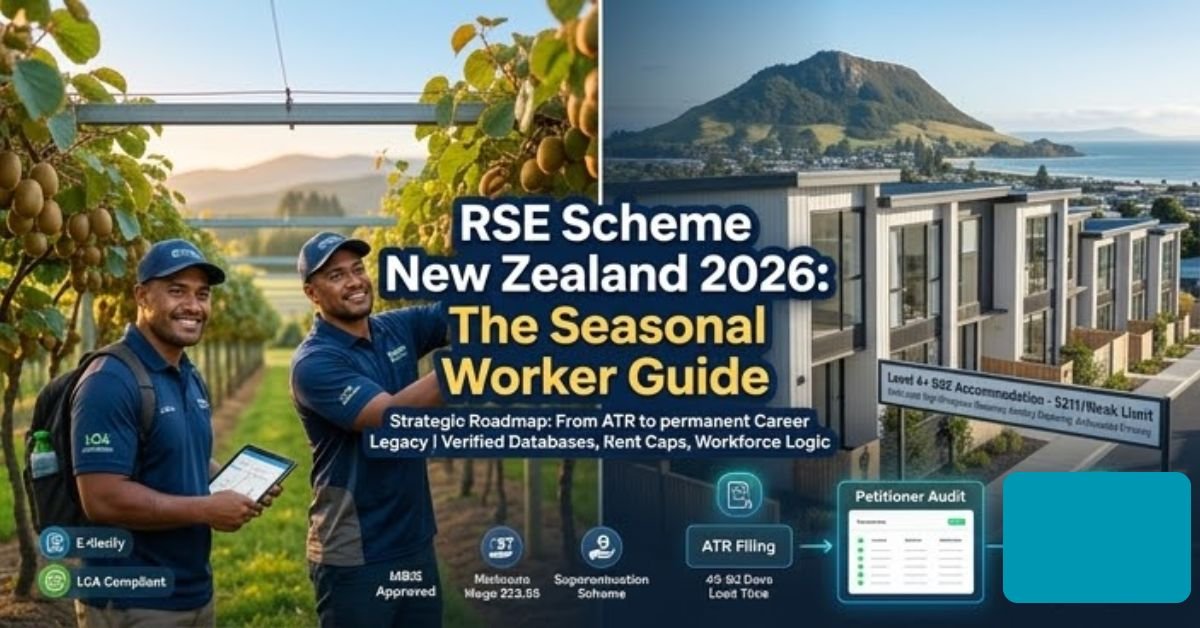
RSE Scheme New Zealand 2026: The Seasonal Worker Guide
Navigating the New Zealand horticulture sector in 2026 has transitioned from a simple labor hunt into a high stakes compliance journey. As the Recognised Seasonal Employer (RSE) framework undergoes its most significant policy recalibration in a decade, the Apply and Hope strategy is officially dead. To secure a seat in NZ’s orchards, you must evolve into a tactical strategist who understands MBIE RSE Policy Reviews and LCA style accommodation standards better than the recruiters themselves.
Whether you are a returning worker or an elite horticulture lead, this roadmap is engineered to out-maneuver the lottery volatility and administrative backlogs currently clogging the system. Executing your New Zealand transition with logistical foresight backed by a Verified Seasonal Worker Database is the only definitive way to convert a 7 month contract into a recurring, high-performance career legacy.
1. The Financial & Legal Pillars: Decoding the 2026 RSE Mandates
The primary catalyst for RSE rejection in 2026 isn’t a lack of physical stamina; it is the employer’s failure to meet the new Workforce Immigration Compliance standards. Before signing any contract, you must audit your potential sponsor’s Agreement to Recruit (ATR). This document reveals the company’s adherence to the Minimum Wage Act 2026 and its history of pastoral care.
2026 RSE Operational Intelligence Table
| Feature | 2026 Standard / Requirement | Sponsorship Reliability |
| Adult Minimum Wage | $23.95 per hour (Effective April 1, 2026) | 100% Statutory Guarantee |
| Weekly Rent Caps | $150 – $211 (Based on Quality Levels) | High (Strictly Monitored) |
| Maximum Stay | 7 Months within any 11 months | Fixed Policy |
| Return Worker Pay | 10% Above Minimum Wage (Recommended) | Tier-1 Employers Only |
| Accommodation | Must meet 9-Point Quality Criteria | High Audit Risk |
Tactical Pro Tip: Use the Department of Labor (DOL) statistics to verify the SOC Code Classification of your role. If the company’s offered wage is below the April 2026 statutory floor ($23.95), your RSE Limited Visa petition will trigger an immediate RFE (Request for Evidence).
2. The New Rent Cap Framework: April 2026 Operational Updates
By 2026, RSE Worker Accommodation Standards will have fundamentally transitioned from a secondary concern into a high-risk compliance metric. Following the April 1, 2026, regulatory shift, Immigration New Zealand has operationalized a strict 5 level rent cap methodology. To insulate your visa petition from aggressive MBIE scrutiny, you must prioritize engagement with employers providing Level 4 or Level 5 housing infrastructure:
- Level 1 Housing ($150/Week Limit): These baseline facilities adhere to the bare statutory minimums, specifically 6m² of floor space per person, basic utility access, and standard bathroom ratios (1:7). While compliant, they often trigger closer inspections of Pastoral Care protocols.
- Level 4+ Housing ($211/Week Limit): These represent premium Operational Excellence builds. Features include untimed high pressure showers, professional weekly sanitization of shared zones, and engineered privacy layouts that exceed standard 2026 mandates.
This strategic focus isn’t merely about living comfort; it establishes a concrete Digital Trail of Pastoral Care that validates the legitimacy of the recruitment to auditors long before the harvesting season even commences.
3. The Vetting Protocol: Strategic Clearance & Workforce Logic
In the 2026 landscape, the MBIE has fully operationalized a USCIS inspired Verification Protocol that utilizes aggressive, real-time audit cycles. Your professional dossier must now function as objective proof of your status as a Highly Skilled seasonal asset, moving beyond traditional job descriptions. The vetting mechanism has fundamentally morphed into a high-stakes investigation of your Workforce Identity:
- The 2026 Credential Authenticity Audit: To bridge the current Trust Gap, all employment history and experience certificates are now cross referenced against global industrial data hubs to flag AI-generated or synthetic work histories. To survive this technical sweep, your Professional Footprint must be undeniably backed exclusively by verifiable, human led achievements.
- Strategic National Interest Pathways: For applicants from Fiji, Samoa, or Tonga, the 2026 focus has shifted toward Pacific Labour Mobility excellence. Utilizing specialized National Interest lanes via elite RSE Recruitment Agencies is a calculated maneuver to bypass standard bottlenecks. This approach ensures you aren’t tethered to the fluctuating luck of a single orchard, but are instead positioned as a priority candidate within the broader NZ horticulture network.
4. The Administrative Gauntlet: From ATR to Stamping
Dominating the 2026 NZ immigration landscape requires a ruthless adherence to a specific procedural sequence. In this high-stakes environment, a single microscopic discrepancy in your Wages Protection Act disclosures can effectively paralyze your relocation for years. To secure your status, execute these three operational milestones:
- ATR Filing (The Lead Time Rule): Timing is your most critical asset. You must ensure the employer initiates and files the Agreement to Recruit (ATR) at least 45 to 60 days before the harvesting peak. This provides a necessary buffer against sudden MBIE processing spikes that often clog the system during the transition into peak seasonal cycles.
- Petitioner Audit (Employer Vetting): Never skip the reconnaissance phase. Utilize the NZ Accredited Employer List to cross check your potential sponsor’s historical performance. You are looking for a clean track record to ensure the entity hasn’t been flagged or blacklisted for past Workforce Immigration Compliance violations, as an At Risk employer can trigger an automatic audit of your specific file.
- Consular Chess Match (The Interview): This is the final tactical hurdle. During your visa interview, your ability to articulate the Specialty Nature of your role, leveraging precise Horticulture Sector logic, is your only definitive shield against a 221(g) style administrative delay. You must speak the language of Technical Field Expertise to satisfy the officer’s increased vetting rigor in 2026.
5. FAQ: RSE 2026 Operational Intelligence Briefing
Q: Does the 2026 RSE framework permit employer portability post-arrival?
A: Negative. Unlike the flexibility of the AEWV, the RSE Limited Visa is strictly tied to a specific Agreement to Recruit (ATR). Portability is only operationalized under Joint ATR configurations between two vetted entities. Attempting to switch without this specific legal architecture can lead to immediate status revocation.
Q: How can a candidate identify a Visa Mill within the NZ horticulture sector?
A: You must audit their Visa Petition Approval Rate with forensic precision. If an entity maintains high-volume filings but has a denial rate exceeding 20% in the Foreign Labor Certification Data, it is classified as a Tripwire sponsor. In 2026, such firms are under constant MBIE surveillance, posing a collateral risk to your individual file.
Q: Is the Superannuation deduction a mandatory requirement for seasonal staff?
A: Absolutely. Under the Seasonal Worker Superannuation (SWSAS) scheme, a calculated percentage of your gross earnings is diverted into a protected fund. These assets are accessible only upon your verified departure from New Zealand, functioning as a long term financial legacy and a primary benefit of the 2026 Pacific mobility framework.
Conclusion: Anchoring Your New Zealand Legacy
Success within the 2026 NZ RSE landscape has fundamentally decoupled from luck; it is now strictly a matter of executing a high-level strategic roadmap that prioritizes Administrative Resilience. By aligning your professional trajectory with Verified Visa Sponsoring Companies and leveraging ATR/LCA Disclosure Data to your advantage, you aren’t merely securing a contract; you are architecting a high-performance lifestyle in the world’s most competitive agricultural economy. In 2026, those who command the technical data of immigration are the ones who convert temporary opportunities into permanent, generational legacies.
Disclaimer:
This operational briefing functions as raw strategic intelligence and operates entirely outside the scope of formal legal or immigration advocacy. All 2026 RSE benchmarks and MBIE filing thresholds are subject to instantaneous, high stakes recalibration dictated by shifting federal mandates. We assume no liability for individual petition outcomes or sudden status revocations, as surviving the 2026 administrative gauntlet requires direct, real time authentication through official Immigration New Zealand gateways. To ensure absolute synchronization with the latest workforce compliance protocols, you must verify your professional dossier with a certified immigration strategist before execution.